Published August 16, 2026
Can Fasting Influence Ketones? Understanding the Connection Between Fasting and Ketone Production
Learn how fasting influences ketone production, ketosis, and fat metabolism, and discover why tracking metabolic trends matters for long-term wellness.
Can Fasting Influence Ketones? Understanding the Connection Between Fasting and Ketone Production
Fasting has gained widespread attention in recent years for its potential role in supporting metabolic health, weight management, and overall wellness. Whether it's intermittent fasting, time-restricted eating, or longer fasting periods, many people are curious about what actually happens inside the body when food intake is temporarily reduced.
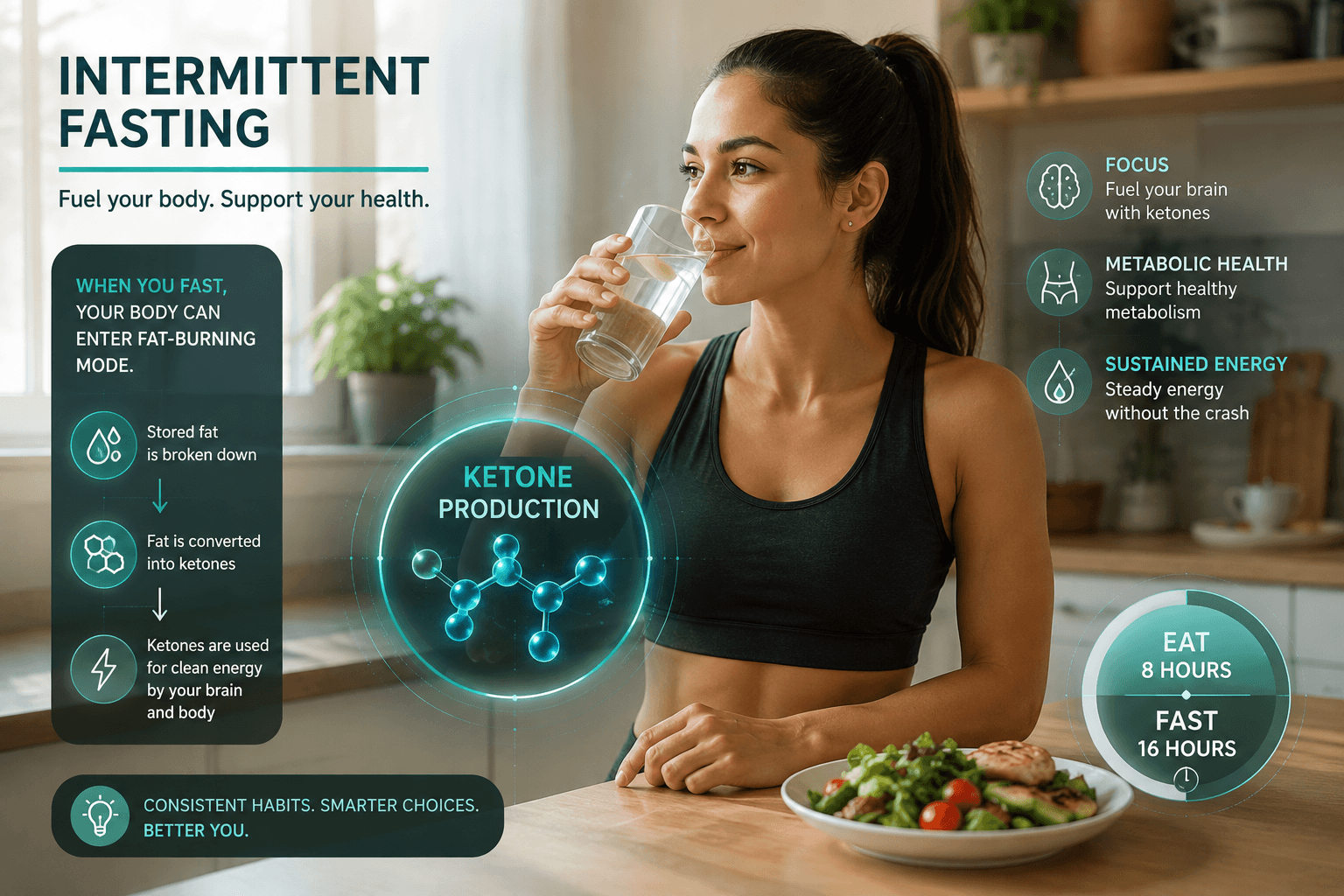
One of the most talked-about changes is the production of ketones, molecules your body creates when it begins using fat as its primary source of fuel instead of carbohydrates.
But does fasting always increase ketones? And what does that actually mean for your health?
The answer is more nuanced than a simple yes or no. Ketone production depends on several factors, including how long you've been fasting, your diet, activity level, and your individual metabolism.
Understanding how fasting influences ketones can help you make more informed decisions about your nutrition and gain a clearer picture of how your body adapts to changes in energy availability.
What Are Ketones?
Ketones are molecules produced by the liver when your body doesn't have enough readily available carbohydrates for energy. Instead of relying primarily on glucose, your body begins breaking down stored fat, producing ketones as an alternative fuel source.
This natural metabolic process is known as ketosis.
Ketones become especially important because they can provide energy for many tissues throughout the body, including the brain, muscles, and heart.
The three primary ketone bodies include:
- Beta-hydroxybutyrate (BHB) – the most abundant ketone circulating in the bloodstream.
- Acetoacetate (AcAc) – the first ketone produced during fat metabolism.
- Acetone – a byproduct that is primarily exhaled through the breath.
Ketone production is a normal physiological response and reflects your body's ability to switch between different fuel sources depending on energy availability.
How Does Fasting Affect Ketone Production?
During the first several hours after eating, your body primarily uses glucose from your recent meal as its main source of energy.
As fasting continues, glucose stores gradually become depleted. To maintain energy production, your body begins breaking down stored fat, which the liver converts into ketones.
Generally, longer fasting periods are associated with greater ketone production, although the exact timing varies from person to person.
Factors that influence ketone production include:
- The length of your fast
- Your usual carbohydrate intake
- Physical activity levels
- Body composition
- Overall metabolic health
- Individual metabolic flexibility
Because everyone responds differently, two people following the same fasting schedule may produce different levels of ketones.
Why Does the Body Produce Ketones?
Ketones are an efficient backup fuel that allows your body to continue functioning when glucose becomes less available.
Rather than viewing ketosis as something unusual, it's helpful to understand that it's part of your body's natural survival mechanism.
Producing ketones allows your body to:
- Continue supplying energy during periods without food
- Support normal brain function
- Utilize stored fat as an energy source
- Adapt to changing energy demands
This metabolic flexibility, the ability to switch between glucose and fat for fuel, is one indicator of a healthy metabolic system.
Does More Ketones Always Mean Better Health?
Not necessarily.
It's easy to assume that higher ketone levels automatically indicate better health, but metabolism is much more complex than a single measurement.
Ketone levels naturally fluctuate based on:
- Meal timing
- Exercise
- Sleep quality
- Hydration
- Stress
- Overall dietary patterns
Higher ketones aren't always the goal. Instead, they're one piece of a larger metabolic picture that can provide helpful context when interpreted alongside other health markers.
Rather than chasing a specific ketone number, it's more valuable to understand what your body is doing over time.
Lifestyle Habits That May Influence Ketone Levels
Fasting is one factor that influences ketone production, but it's certainly not the only one.
Other lifestyle habits that may affect ketones include:
Dietary Choices
Lower carbohydrate intake generally encourages greater fat utilization, while carbohydrate-rich meals typically reduce ketone production.
Physical Activity
Exercise can increase your body's demand for energy, encouraging fat metabolism depending on workout intensity and duration.
Sleep
Poor sleep may influence hormones involved in metabolism, potentially affecting how efficiently your body uses different fuel sources.
Hydration
Proper hydration supports numerous metabolic processes and contributes to overall health during fasting periods.
Stress Management
Chronic stress may influence hormones that affect energy regulation and metabolic balance.
These lifestyle factors often work together rather than independently.
Why Metabolic Flexibility Matters
One of the biggest advantages of understanding ketones is learning about metabolic flexibility, your body's ability to efficiently switch between carbohydrates and fat depending on what's available.
A metabolically flexible body can adapt to changes in food intake, exercise, and daily routines without becoming overly reliant on a single energy source.
Supporting metabolic flexibility may contribute to:
- More stable energy levels
- Better exercise performance
- Improved recovery
- Greater adaptability to changing routines
- Long-term metabolic wellness
Rather than focusing on one metabolic marker, understanding how your body responds over time provides a more complete picture of your overall health.
Why Tracking Trends Is More Meaningful Than a Single Measurement
Metabolic health is dynamic.
Your ketone levels can vary from day to day depending on what you ate, how much you exercised, your hydration status, your sleep quality, and even your stress levels.
That's why looking at long-term trends often provides more valuable insights than relying on a single result.
Tracking multiple metabolic markers over time can help you:
- Understand how fasting influences your body
- Recognize meaningful lifestyle patterns
- Make informed nutrition decisions
- Monitor changes in your metabolic health
- Focus on sustainable wellness instead of short-term fluctuations
Health isn't defined by one test, it's revealed through consistent patterns.
The Bigger Picture: Fasting Is Just One Part of Metabolic Health
While fasting can influence ketone production, it's only one component of a healthy lifestyle.
Balanced nutrition, regular physical activity, quality sleep, hydration, and effective stress management all work together to support your metabolism.
Rather than following trends or aiming for perfect numbers, the goal is to better understand how your own body responds to everyday habits.
Everyone's metabolism is unique, and meaningful progress often comes from consistent, sustainable choices rather than dramatic changes.
The Bottom Line
Fasting can influence ketone production by encouraging your body to shift from using glucose to utilizing stored fat for energy. This natural process reflects your body's remarkable ability to adapt to changing energy needs.
However, ketones are only one part of the bigger metabolic picture. Understanding them alongside other health markers provides a more complete view of your overall wellness and how your lifestyle habits may be influencing your body.
Whether you're exploring intermittent fasting or simply interested in learning more about your metabolism, the goal isn't to chase higher ketone levels, it's to better understand your body's patterns so you can make informed decisions that support long-term health.