Published September 11, 2026
Ketones vs. Glucose: Which Fuel Does Your Body Prefer?
Learn the difference between ketones and glucose, how your body uses each for energy, and how monitoring metabolic trends can support your wellness journey.
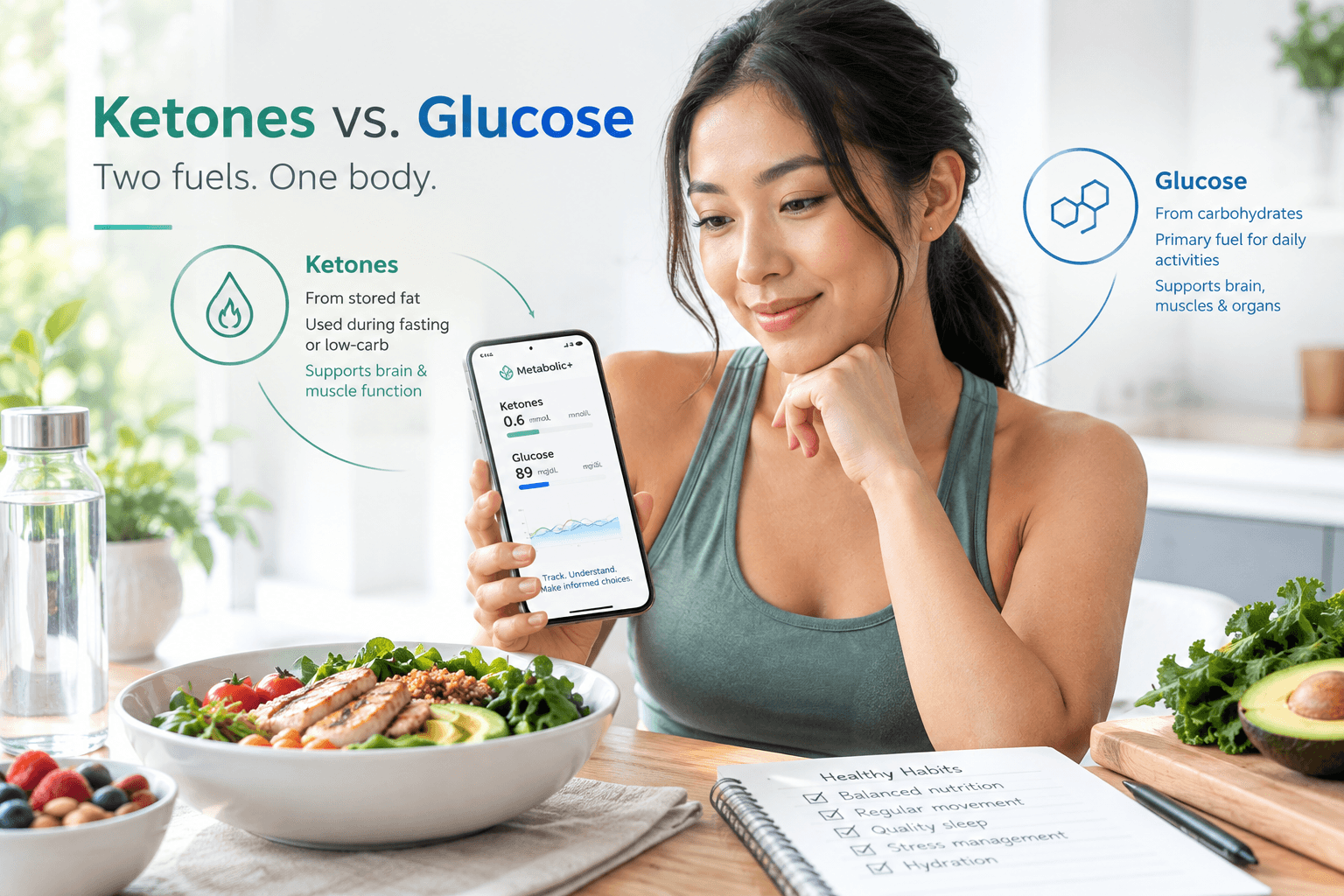
Ketones vs. Glucose: Which Fuel Does Your Body Prefer?
Fueling Your Body: Understanding Ketones and Glucose
Your body needs energy every minute of every day. Whether you're walking the dog, answering emails, lifting weights, or simply breathing while you sleep, your cells rely on fuel to keep everything running smoothly.
The two primary energy sources your body uses are glucose and ketones. While both provide energy, they're produced differently and often reflect different metabolic states.
You may have heard ketones mentioned alongside ketogenic diets or intermittent fasting, while glucose is commonly associated with carbohydrates and blood sugar. But understanding how these fuels work isn't just for athletes or people following specialized diets. Learning how your body shifts between glucose and ketones can offer valuable insight into your metabolism and overall wellness.
Let's explore what ketones and glucose are, how they're different, and why both play important roles in supporting your body's energy needs.
What Is Glucose?
Glucose is the body's primary and most readily available source of energy.
After eating carbohydrates, your digestive system breaks them down into glucose, which enters your bloodstream. From there, insulin helps move glucose into your cells, where it's used to produce energy.
Glucose supports many everyday functions, including:
- Brain function
- Muscle activity
- Physical exercise
- Organ function
- Daily movement
For most people following a balanced diet, glucose serves as the body's main fuel source throughout the day.
What Are Ketones?
Ketones are an alternative fuel source produced by the liver.
When carbohydrate availability decreases, your body begins breaking down stored fat for energy. During this process, the liver produces ketones, which many tissues, including the brain, can use as fuel.
Ketone production may increase during:
- Intermittent fasting
- Low-carbohydrate or ketogenic diets
- Extended exercise
- Periods of lower carbohydrate intake
Rather than replacing glucose entirely, ketones provide another efficient energy source when the body shifts toward burning more fat.
Ketones vs. Glucose: What's the Difference?
Although both provide energy, they come from different sources and are produced under different conditions.
Glucose
- Produced from carbohydrates
- Primary fuel for most daily activities
- Supported by insulin regulation
- Common after meals
- Used by nearly every cell
Ketones
- Produced from stored fat
- Alternative fuel during lower carbohydrate availability
- Produced by the liver
- Common during fasting or ketosis
- Used by many organs, including the brain
Neither fuel is inherently "better." Your body is designed to use both depending on your nutritional intake, activity level, and metabolic needs.
How Your Metabolism Switches Between Fuels
One of the most fascinating aspects of human metabolism is its ability to adapt.
Your body doesn't rely exclusively on one fuel source. Instead, it continuously adjusts based on your environment and daily habits.
For example:
- After eating carbohydrates, glucose becomes the primary fuel.
- During overnight fasting, your body gradually begins increasing fat utilization.
- During extended fasting or low-carb eating patterns, ketone production may rise.
- Exercise can influence which fuel source your body relies on depending on intensity and duration.
This ability to transition between fuels is often referred to as metabolic flexibility.
The more adaptable your metabolism is, the more efficiently your body can respond to changing energy demands.
Why Metabolic Flexibility Matters
Being able to use both glucose and ketones efficiently gives your body options.
Metabolic flexibility may support:
- More efficient energy production
- Adaptation to different eating patterns
- Improved endurance during longer activities
- Better understanding of how nutrition affects your body
- Greater awareness of personal wellness habits
Rather than focusing on one fuel source, many wellness professionals emphasize understanding how your body responds over time.
What Influences Ketone Production?
Several lifestyle factors can affect ketone levels.
These may include:
- Carbohydrate intake
- Meal timing
- Intermittent fasting
- Physical activity
- Sleep quality
- Overall nutrition
- Hydration status
Because these factors change from day to day, ketone levels may naturally fluctuate.
Monitoring trends over time often provides more meaningful insights than relying on a single measurement.
Can You Have Both Glucose and Ketones?
Yes.
Although glucose and ketones are often discussed separately, the body can use both simultaneously.
Depending on your activity level, recent meals, and metabolic state, different tissues may rely on different fuel sources throughout the day.
Human metabolism is dynamic, not an on/off switch.
That's one reason why looking at multiple wellness markers together often provides a more complete picture than focusing on a single number.
Tracking Ketones as Part of Your Wellness Journey
Ketone levels aren't simply about following a ketogenic diet.
Many people choose to monitor ketones to better understand how their body responds to:
- Dietary changes
- Fasting routines
- Exercise
- Recovery
- Daily wellness habits
Tracking these trends over time can help reveal patterns that may not be obvious from day-to-day observations alone.
The goal isn't chasing a perfect result, it's building awareness of how your lifestyle influences your metabolism.
Small Daily Habits Can Influence Metabolism
Your metabolism reflects the combined effect of many everyday choices.
Simple habits that support overall metabolic wellness include:
- Staying hydrated
- Eating balanced meals
- Getting quality sleep
- Exercising regularly
- Managing stress
- Allowing adequate recovery
While no single habit determines metabolic health, consistent routines often contribute to long-term wellness.
Understanding the Bigger Picture
Glucose and ketones aren't competing against one another, they're simply different tools your body uses to produce energy.
Learning how your metabolism shifts between these fuels can help you better understand how nutrition, movement, hydration, and recovery influence your body over time.
Instead of viewing metabolism through a single measurement, consider the broader picture. Looking at trends and wellness markers together can provide more meaningful insight into your overall health journey.
Because understanding your metabolism isn't about choosing one fuel over another, it's about understanding how your body works best.
Frequently Asked Questions
Are ketones better than glucose?
Not necessarily. Both are natural energy sources that your body uses depending on your nutrition, activity level, and metabolic state.
Do ketones mean you're burning fat?
Ketones are produced when the body breaks down fat for energy, but ketone levels should always be interpreted within the context of your overall lifestyle and metabolism.
Can exercise increase ketones?
Depending on exercise duration and intensity, physical activity may influence ketone production, especially when combined with lower carbohydrate intake or fasting.
Why do people monitor ketones?
Some people monitor ketones to better understand how their metabolism responds to dietary patterns, fasting, exercise, and other lifestyle habits.