Published October 5, 2026
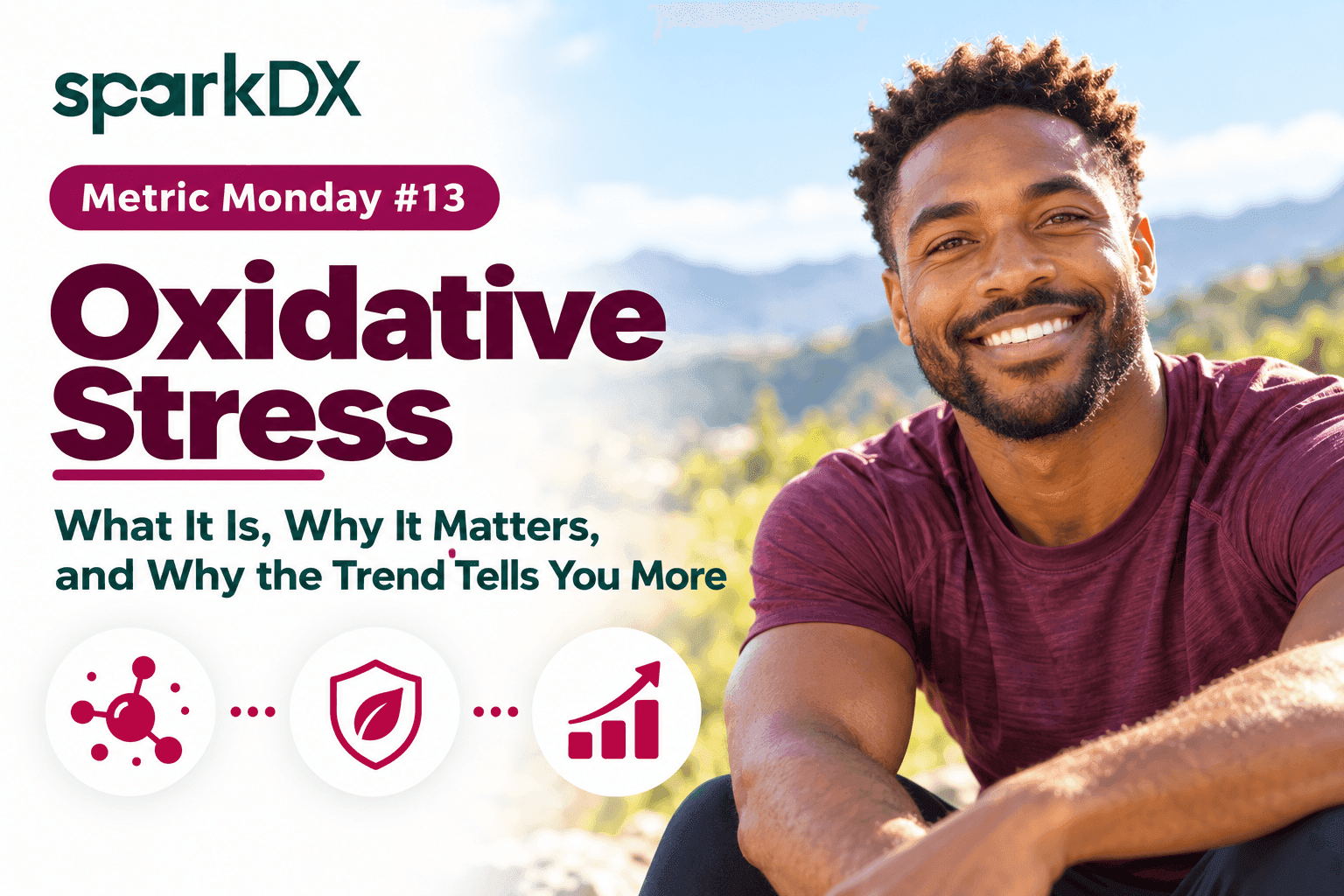
Oxidative Stress: What It Is, Why It Matters, and Why the Trend Tells You More
Oxidative Stress: A Plain-English Guide to What the Trend Means
Published October 5, 2026
Oxidative Stress: A Plain-English Guide to What the Trend Means
What is Oxidative Stress?
Oxidative stress is a broad term for an imbalance between reactive molecules produced during normal metabolism and the body’s antioxidant and repair systems. Some reactive molecules are normal and useful; the concern is when oxidant activity outpaces the systems that keep it in check.
Why test Oxidative Stress?
Wellness testing can be used as a way to follow a specific oxidative-stress-related marker over time. The important point is that “oxidative stress” is not one single molecule or one universal test. Different assays look at different byproducts or pathways.
What can the result tell you?
A result can provide a directional wellness signal from the assay used by the test. It should not be interpreted as a diagnosis, a direct measurement of “cell damage,” or proof that you need antioxidant supplements.
A single result is best thought of as a snapshot. Recent strenuous exercise, illness, smoking, diet, supplements, sleep, and sample conditions can influence oxidative-stress-related measurements. That is why context matters: what you ate or drank, how hard you exercised, how well you slept, the time of day, and how consistently you followed the test instructions can all shape what you see.
Why the trend matters
Oxidative-stress-related markers can shift with illness, exercise, sleep, smoking, environmental exposure, diet, and other factors. Repeating the same assay under similar conditions is what makes the result useful for trend tracking.
The most useful question is often not, “Was today perfect?” It is, “What direction am I moving, and what changed around the same time?” That can help you connect everyday choices with your own pattern instead of chasing a single number.
How to make your trend more useful
For cleaner comparisons over time, try to test under similar conditions whenever possible. Keep the test conditions as similar as possible, and note unusually hard exercise or illness. Focus on a repeated pattern rather than trying to “fix” one result with a large dose of supplements.
The takeaway
Oxidative Stress is most useful when it becomes part of a pattern. Use the result as feedback, look for repeatable changes, and give yourself enough data points to see what is normal for you.
High-dose antioxidant supplements are not automatically better and can interact with health conditions or treatments. Discuss supplements with a healthcare professional when appropriate. SparkDX results are intended for wellness information and are not a diagnosis or a substitute for medical care.
Spend $50.00 more and get free shipping!
Your cart is empty.
Continue Shopping