Published September 7, 2026
Hydration Myths Explained: Separating Fact from Fiction
Discover the truth behind common hydration myths. Learn how hydration supports overall wellness and build healthy habits with practical, science-informed tips.
Hydration Myths Explained: Separating Fact from Fiction
Think You Know Hydration? These Common Myths Might Surprise You
You've probably heard the advice countless times: Drink eight glasses of water a day. Carry a giant water bottle everywhere. If you don't feel thirsty, you're probably already dehydrated.
Hydration is one of the most talked-about topics in health and wellness, yet it's also surrounded by more myths than almost any other wellness habit. While staying hydrated is undeniably important, many popular hydration "rules" aren't as straightforward as they seem.
The truth is that everyone's hydration needs are different. Your activity level, environment, diet, and overall lifestyle all play a role in determining how much fluid your body needs. Rather than following one-size-fits-all advice, it's far more helpful to understand how hydration actually works.
Let's separate fact from fiction and explore some of the biggest hydration myths.
Why Hydration Matters
Water plays a role in nearly every function of your body. It helps regulate temperature, supports circulation, transports nutrients, lubricates joints, and assists in removing waste. Even small changes in hydration can influence how you feel throughout the day.
Proper hydration helps support:
- Energy levels
- Mental focus and concentration
- Physical performance
- Digestion
- Temperature regulation
- Overall wellness
Because hydration affects so many systems, understanding the facts can help you build healthier daily habits.
Myth #1: Everyone Needs Exactly Eight Glasses of Water a Day
This is probably the most common hydration myth.
While "eight glasses a day" is an easy guideline to remember, it isn't a universal requirement.
Your hydration needs depend on many factors, including:
- Your activity level
- Climate and temperature
- Body size
- Diet
- Overall health
- Individual lifestyle
Someone exercising outdoors in hot weather will naturally need more fluids than someone spending the day in an air-conditioned office.
Instead of focusing on reaching one specific number every day, it's often more helpful to pay attention to your body's signals and maintain consistent hydration throughout the day.
Myth #2: If You're Thirsty, You're Already Dehydrated
Many people believe thirst only appears after significant dehydration has already occurred.
In reality, thirst is one of your body's natural ways of helping regulate fluid balance. For most healthy adults, feeling thirsty is simply a reminder that it's time to drink.
That said, it's still beneficial to develop regular hydration habits instead of waiting until you're extremely thirsty, especially during exercise, travel, or hot weather.
Listening to your body while staying consistent is usually more effective than trying to force large amounts of water all at once.
Myth #3: Coffee and Tea Don't Count
Because caffeine has mild diuretic effects, some people assume coffee and tea contribute to dehydration.
Fortunately, research has shown that beverages like coffee and tea still contribute to your overall daily fluid intake when consumed in moderation.
Water remains the best choice for hydration, but your morning coffee or afternoon tea can still help support your overall fluid intake.
The key is balance.
Myth #4: Clear Urine Always Means You're Perfectly Hydrated
Many people use urine color as their only measure of hydration.
While urine color can provide useful clues, it's not the complete picture.
Urine appearance may also be influenced by:
- Vitamins and supplements
- Certain foods
- Medications
- Recent fluid intake
Hydration isn't determined by one observation alone. Looking at overall patterns and daily habits often provides a better understanding than relying on a single moment.
Myth #5: Sports Drinks Are Better Than Water for Everyone
Sports drinks certainly have their place, especially during prolonged or intense physical activity where electrolytes may be lost through heavy sweating.
However, for most everyday activities, plain water is usually enough to support healthy hydration.
If you're:
- Walking
- Working
- Running errands
- Completing a regular gym session
...water is often all you need.
Sports drinks can contain added sugars and calories that aren't necessary for routine daily hydration.
Myth #6: You Can Drink All Your Water at Once
Some people try to "catch up" by drinking several large bottles of water in a short period.
While staying hydrated is important, hydration works best when fluids are consumed consistently throughout the day.
Simple ways to stay hydrated include:
- Carry a reusable water bottle.
- Drink water with meals.
- Sip fluids regularly throughout the day.
- Increase intake during exercise or hot weather.
- Eat water-rich foods like fruits and vegetables.
Consistency is far more effective than trying to make up for an entire day's hydration all at once.
Everyday Habits That Support Better Hydration
Building healthy hydration habits doesn't need to be complicated.
Small daily choices can make hydration feel effortless:
- Start your morning with a glass of water.
- Keep water within easy reach throughout the day.
- Include fruits and vegetables with high water content.
- Drink extra fluids during exercise.
- Pay attention to hot weather or travel.
- Pair drinking water with regular daily routines.
These habits often become automatic over time.
Hydration Is Part of Your Bigger Wellness Picture
Hydration doesn't exist in isolation.
It works alongside other wellness habits like:
- Nutrition
- Physical activity
- Sleep
- Recovery
- Stress management
When these areas work together, they can help support overall well-being. Looking at hydration as one piece of a larger wellness picture often provides more meaningful insight than focusing on water intake alone.
Understanding Your Hydration Patterns
Hydration naturally changes from day to day based on activity, environment, nutrition, and routine.
Rather than relying on assumptions, many people are becoming interested in understanding how their body responds over time.
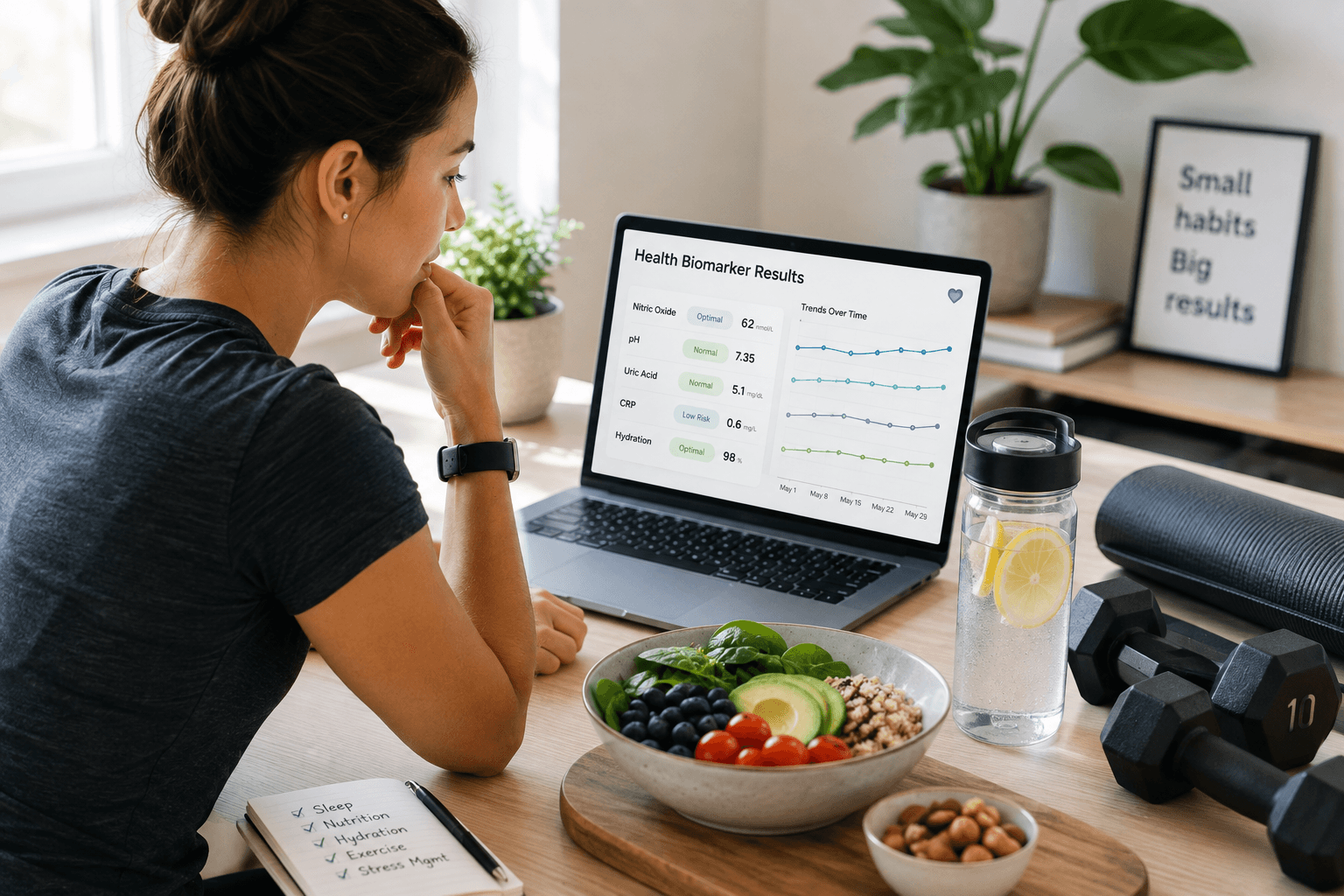
Tracking hydration alongside other wellness biomarkers can help reveal patterns that support more informed lifestyle decisions. Instead of focusing on a single snapshot, observing trends may provide a more complete picture of your overall wellness.
Hydration Doesn't Have to Be Complicated
Hydration advice is everywhere, but not all of it is based on how the body actually works. The good news is that staying hydrated doesn't require following rigid rules or chasing a specific number every day.
Focus on building consistent habits, listening to your body's signals, and recognizing that hydration is just one part of a healthy lifestyle. Small, sustainable choices often have the greatest long-term impact.
The more you understand your body's needs, the easier it becomes to support your wellness, one sip at a time.
Frequently Asked Questions
Is eight glasses of water a day enough?
It depends. Hydration needs vary based on factors such as activity level, climate, body size, and lifestyle. There isn't a one-size-fits-all recommendation.
Can coffee count toward hydration?
Yes. Coffee and tea can contribute to your daily fluid intake when consumed in moderation, although water is still the best choice for staying hydrated.
What's the best way to stay hydrated?
Drink fluids consistently throughout the day, eat water-rich foods, and increase your intake during exercise or in hot weather.
Why is hydration important for wellness?
Hydration supports many essential functions, including energy production, concentration, circulation, digestion, and temperature regulation.