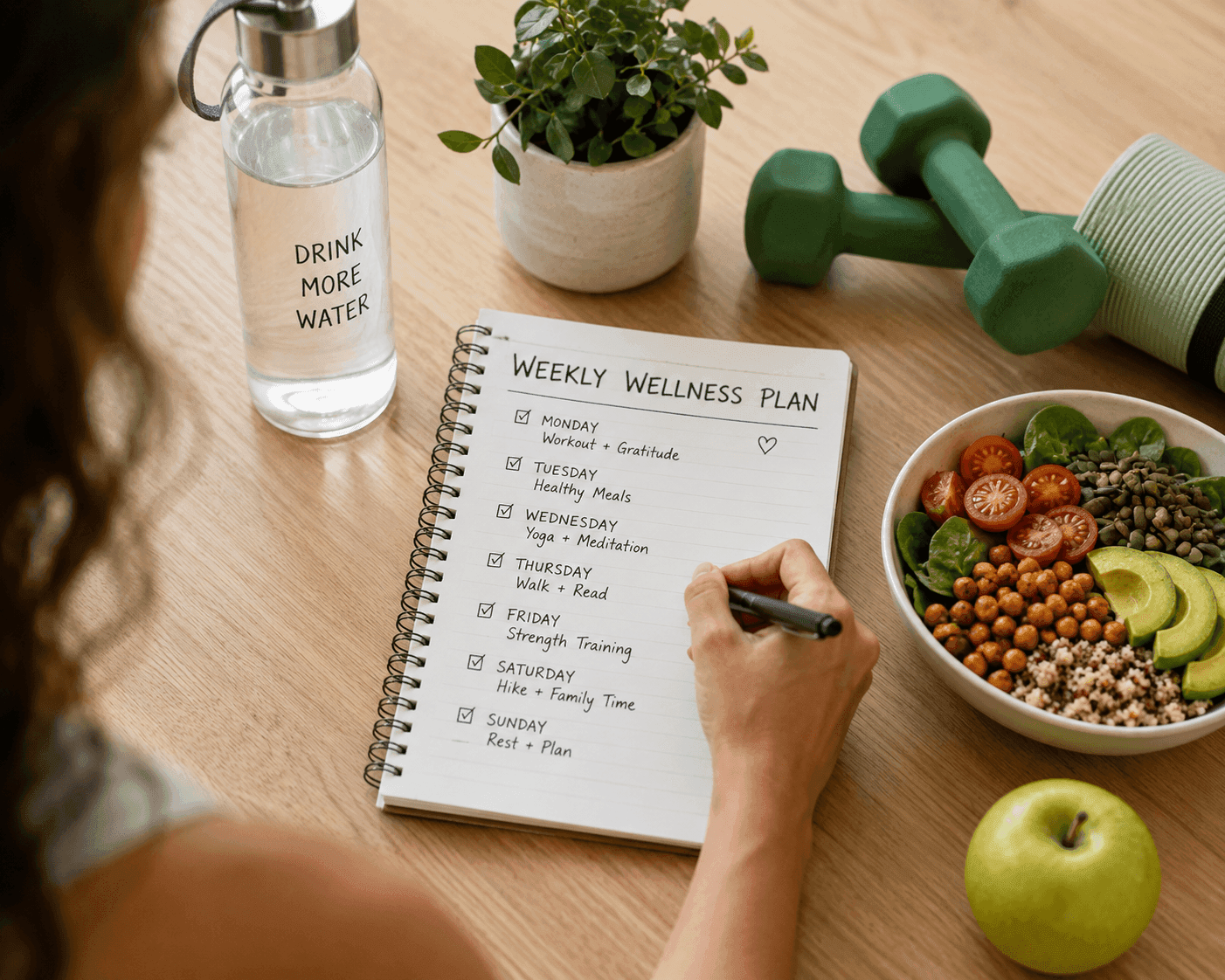
How to Build a Weekly Wellness Routine That Actually Sticks
Create a Routine That Works for Your Life
We often think improving our health requires a complete lifestyle overhaul. New workout plans, strict diets, and ambitious goals can feel motivating at first, but they're often difficult to maintain. After a few weeks, life gets busy, motivation fades, and many people find themselves back where they started.
The truth is, lasting wellness rarely comes from doing everything perfectly. Instead, it's built through consistent habits that fit naturally into your everyday life. A well-planned weekly wellness routine gives you structure without feeling restrictive, making it easier to stay on track even during busy weeks.
Rather than chasing perfection, focus on building a routine that supports your physical and mental well-being one day at a time.
Why a Weekly Wellness Routine Matters
Healthy habits don't produce results overnight. Small choices made consistently often have a much greater impact than occasional bursts of motivation.
A weekly wellness routine helps you:
- Stay consistent with healthy habits
- Reduce decision fatigue throughout the week
- Balance work, exercise, nutrition, and recovery
- Build routines that are realistic and sustainable
- Create healthy habits that become automatic over time
Instead of asking yourself every day what you should do, a routine provides a simple roadmap that helps you make healthier choices with less effort.
Start with Realistic Goals
One of the biggest mistakes people make is trying to change everything at once. A successful wellness routine begins with manageable goals that you can realistically maintain.
Ask yourself:
- What healthy habit feels easiest to start?
- What challenge do I face most often?
- What small change could I maintain every week?
For some people, that may be drinking more water. For others, it might be walking after dinner or going to bed 30 minutes earlier.
Small improvements often become the foundation for bigger lifestyle changes.
Build Your Routine Around Five Wellness Pillars
A balanced wellness routine supports multiple aspects of health rather than focusing on just one.
1. Move Your Body
You don't need to spend hours at the gym every day. Consistent movement is often more valuable than occasional intense workouts.
Your weekly plan might include:
Aim to find activities you genuinely enjoy, making them easier to stick with over time.
2. Prioritize Quality Nutrition
Healthy eating doesn't require complicated meal plans or eliminating your favorite foods. Instead, focus on building balanced meals most of the time.
Simple habits include:
- Preparing healthy lunches ahead of time
- Eating more fruits and vegetables
- Including lean protein with meals
- Limiting highly processed snack
Consistency matters far more than perfection.
3. Make Sleep Part of Your Routine
Sleep is one of the most overlooked parts of wellness.
Creating a consistent sleep schedule supports:
Simple improvements include reducing screen time before bed, maintaining a regular bedtime, and creating a relaxing evening routine.
4. Manage Everyday Stress
Stress is part of life, but how we respond to it can make a significant difference.
Consider scheduling time each week for activities that help you recharge, such as:
- Connecting with friends or family
These moments of recovery are just as valuable as physical exercise.
5. Track Your Progress
Progress isn't always visible from one day to the next.
Tracking your habits over several weeks can help you notice patterns that might otherwise go unnoticed.
You might track:
Looking at trends instead of individual days helps create a more realistic picture of your wellness journey.
Plan Your Week in Advance
One of the easiest ways to stay consistent is to spend a few minutes planning your week before it begins.
For example:
Monday
Tuesday
Wednesday
You don't need every day to look the same. Flexibility helps your routine fit your lifestyle rather than competing with it.
Expect Imperfection
No one follows their wellness routine perfectly every week.
There will be busy days, unexpected events, vacations, and moments when your routine gets interrupted.
That's completely normal.
Instead of giving up after missing one workout or choosing an unhealthy meal, simply return to your routine with your next decision.
Progress comes from consistency over months, not perfection in a single week.
Wellness Is More Than Exercise
Many people think wellness only means eating healthy and exercising regularly. In reality, wellness includes many interconnected aspects of your daily life.
Your weekly routine should support:
When these areas work together, they create a stronger foundation for long-term health.
Understanding How Your Habits Work Together
A weekly wellness routine becomes even more valuable when you understand how your daily habits influence your body over time.
Factors such as:
all work together to shape your overall wellness.
Looking at long-term patterns, rather than focusing on individual days, can help you make more informed decisions and build habits that truly support your health journey.
One Week Can Start a Lifetime of Healthy Habits
Building a wellness routine doesn't require a perfect plan or dramatic lifestyle changes. It starts with one small decision, followed by another, repeated consistently over time.
Whether your goal is to feel more energized, manage stress more effectively, improve your sleep, or simply live a healthier lifestyle, a weekly routine provides the structure to help you get there.
Remember, lasting wellness isn't built in a day. It's built through the small choices you make every week.