Published August 27, 2026
How Lifestyle Changes Show Up in Biomarkers: Understanding the Bigger Picture
Learn how healthy habits and biomarker tracking work together to reveal long-term health trends and support informed wellness decisions.
Published August 27, 2026
Learn how healthy habits and biomarker tracking work together to reveal long-term health trends and support informed wellness decisions.
When you start making healthier choices, it's natural to wonder, "Is any of this actually making a difference?"
Maybe you've started eating more balanced meals, exercising regularly, drinking more water, prioritizing sleep, or finding better ways to manage stress. While these habits often help you feel better over time, some of the most meaningful changes aren't always immediately noticeable.
That's where biomarker tracking can provide valuable insights.
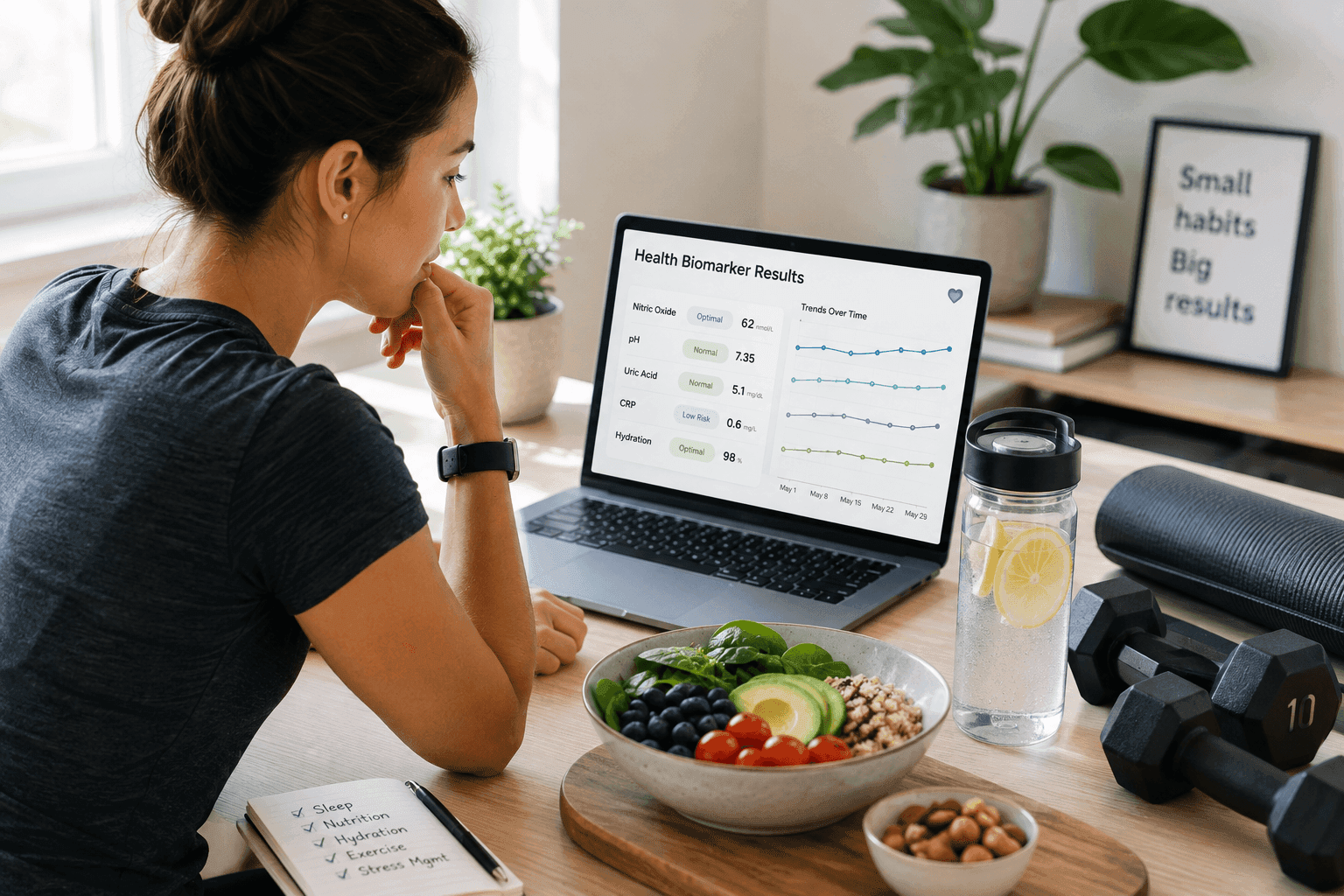
Biomarkers are measurable indicators that offer a snapshot of what's happening inside your body. Rather than relying solely on how you feel from day to day, tracking biomarkers over time can help you better understand how your healthy habits may be influencing your overall wellness.
It's important to remember that no single result tells the whole story. Lasting health is built over time, and meaningful trends often emerge through consistency rather than overnight changes.
Biomarkers are measurable characteristics that provide information about how your body is functioning. They can reflect various aspects of your health, including metabolism, cardiovascular wellness, inflammation, nutrition, and overall physiological balance.
Examples of commonly monitored biomarkers include:
These measurements don't define your health on their own. Instead, they provide pieces of a much larger picture that can help you and your healthcare provider better understand your overall wellness.
It's easy to focus on a single number after receiving a health test, but our bodies are constantly changing.
Sleep quality, hydration, stress, physical activity, nutrition, illness, and even travel can temporarily influence certain biomarkers. That's why looking at long-term patterns often provides more meaningful insights than relying on a single snapshot.
For example, one isolated result may simply reflect what was happening in your body on that particular day. Tracking biomarkers over time can help you identify whether your habits are moving you toward healthier patterns or highlighting areas that may deserve more attention.
Progress is rarely perfectly linear, and that's completely normal.
Our daily routines affect far more than how we feel, they also influence many of the measurable processes happening inside our bodies.
Consistent healthy habits that may support overall wellness include:
These choices don't usually produce immediate results. Instead, their greatest impact comes from being repeated consistently over weeks, months, and years.
Many people expect major health improvements to happen quickly, but lasting wellness is usually built through small, sustainable changes.
Imagine making one healthier decision every day:
Each decision may seem small on its own. However, over time, these habits can work together to support better overall health and contribute to positive biomarker trends.
Consistency almost always outperforms perfection.
One of the greatest benefits of biomarker tracking is that it allows you to connect your lifestyle with measurable information.
For example, after several months of improving your daily habits, you may begin to notice patterns that align with your efforts. While everyone's body responds differently, tracking over time can help you observe changes and have more informed conversations with your healthcare provider.
Instead of asking, "Is this number good or bad?" you can begin asking more meaningful questions, such as:
These questions encourage a long-term mindset rather than focusing solely on immediate results.
While biomarkers can provide valuable information, they represent only one part of your overall health.
Your wellness also includes:
Looking at both measurable health data and how you feel creates a more complete understanding of your well-being.
Numbers can provide guidance, but they don't tell your entire story.
One of the biggest mistakes people make is trying to change everything at once.
Instead, focus on habits that fit naturally into your daily life. Small improvements are often easier to maintain, and those consistent choices are what create lasting results.
Some sustainable habits include:
Healthy routines don't need to be perfect, they simply need to be consistent.
Good health isn't measured by what happens over a single day or even a single month. It's built through thousands of everyday choices that gradually shape your overall well-being.
Tracking your health over time allows you to recognize progress that may otherwise go unnoticed. It can reinforce positive habits, highlight opportunities for improvement, and help you stay focused on the bigger picture.
Rather than chasing perfection, focus on building routines that support your health today, tomorrow, and for years to come.
Healthy habits don't always produce immediate results, but that doesn't mean they aren't working.
Nutrition, exercise, sleep, hydration, and stress management all contribute to your overall wellness, and many of these positive changes become more meaningful when viewed over time through biomarker tracking.
The goal isn't to achieve perfect numbers. It's to better understand your body, recognize meaningful trends, and make informed decisions that support lifelong health.
Because every healthy choice you make today has the potential to shape your health tomorrow.
Spend $50.00 more and get free shipping!
Your cart is empty.
Continue Shopping